articles

  • What's Next for Honduras?

    Honduran Democracy in Tatters

    NACLA, News Analysis, Jul 13, 2009

    Ousted Honduran President Manuel Zelaya has reiterated his vow to quickly return to his country to re-assume his rightful place as the nation's president. This week will be a determinant moment in the outcome of the crisis caused by the June 28 military coup against Zelaya. The major players in this crisis have all shown signs of growing impatience with the current situation, meaning that everything could come to a head.

  • Puerto Rico to Lay Off 30,000 Workers

    PR Boot

    New America Media (NAM), News Report, Mar 04, 2009

    Amid one of the gravest economic crises in global history, Puerto Rico announced that it is laying off 30,000 public sector employees and freezing government salaries for two years. The island’s current economic crisis can be traced partly to "Operation Bootstrap," a set of radical free market policies implemented in the 1950s on the island that were later replicated across Latin America.

  • Latin American Media See Mexico as New Drug King

    Mexican Cartel Map

    New America Media (NAM), News Analysis, Sep 01, 2008

    While U.S. media express concern about Mexican narco-violence spreading into the United States, media in Latin American countries highlight a different reason for worry: Mexican cartels are already there. 

commentary

  • Mr. President: Don't Make Colombia Another Afghanistan

    Obama Don't Make Colombia Another Afghanistan

    The Progressive, Aug 20, 2009

    The Obama administration should reconsider its decision to escalate U.S. involvement in Colombia's long-running civil war. The White House already has its hands full with Iraq and Afghanistan; it does not need to be drawn deeper into another bloody conflict.

  • Obama Administration Needs to Maintain Tough Stance Against Honduran Coup

    Coup in Honduras

    The Progressive, Jul 09, 2009

    The Obama administration deserves praise for its response to the coup in Honduras. It sends a hopeful signal that Washington’s traditional support for such undemocratic power grabs has ended. But the White House still has a lot of housecleaning to do.

  • Obama Whitewashes U.S. Foreign Policy

    Obama and Latin America

    The Progressive, Jun 17, 2009

    In two major speeches in the last month, President Barack Obama has tried to whitewash the history of U.S. foreign policy. His assertions ring especially hollow in Latin America, where Washington propped up tyrannical leaders and bankrolled murderous armies.

blog

  • Impressive Map of Guatemala's Natural Resources

    Guatemala Map

    Jul 25, 2009

    Someday I'd like to make a map like this for Colombia. This map shows key natural resource extraction sites in Guatemala and allows viewers to manipulate the information included on the map. One pretty interesting conclusion shown by the map is the close correlation between road construction and extractive projects.

  • U.S. Escalates Military Presence in Colombia

    Jul 22, 2009

    A just-published article by my friend and colleague John Lindsay-Poland raises alarming questions about the revamping of U.S. militarization in Colombia. He calls current plans in the works "the worst thing to happen to U.S. policy in the Andes since Plan Colombia began a decade ago."

  • Fugitive 'Narco-Hippo' Slain

    Pablo Escobar's Hippo Killed

    Jul 11, 2009

    Colombian authorities have finally caught up with a hippopotamus who had been on the run for two years. The hippo had escaped, along with his mate, from the narco-estate of slain drug don Pablo Escobar. The hippos had produced an offspring in the wild of the Magdalena River valley, and the two remaining hippos are still unaccounted for.


multimedia

  • In Depth: Plan Colombia and Oil Palm

    Jeff Farias Show, Radio Interview, Jun 24, 2009

    An in depth interview on how Plan Colombia provided US-taxpayer funds to murderous paramilitary groups and drug traffickers. The funds were to support the cultivation of oil palms, which can be used to make biofuels. All in an effort that's part of the U.S.-backed war on drugs and the Colombian government's drive to become a biofuels powerhouse.

  • USAID Funds Traced to Drug Traffickers and Paramilitaries

    Palm Plantation in Curvaradó, Chocó

    FSRN, Radio Report, Jun 19, 2009

    U.S. anti-drug aid to Colombia found its way into the hands of businesses owned by violent narco-paramilitaries, according to an article published by The Nation. Investigative journalist – and FSRN contributor – Teo Ballvé wrote the report. He recently spoke to FSRN about his findings.

papers

  • The De Soto Dilemma: Squatters and Urban Land Titling

    Paper, Mar 20, 2008

    Since property regimes have informed the basic foundations of liberal economic and political thought, urban land titling projects provide an insightful technical lens and a revealing case study for the identification and assessment of contemporary liberalisms, and the varied ways liberal forms are presently being deployed.

  • Bioprospecting and Biopiracy: Intellectual Property Rights and Indigenous Peoples

    Paper, Mar 19, 2005

    In recent decades, the emergence of a confluence of factors has made the relationship between intellectual property rights, indigenous knowledge and biological resource extraction the subject of extremely heated debate. And almost every market and non-market value cited to discredit bioprospecting – fairness, compensation, cultural preservation, biodiversity conservation, food security, public health – are the same ones used by bioprospectors to justify and give credence to their endeavor. This has raised even more questions.

bio

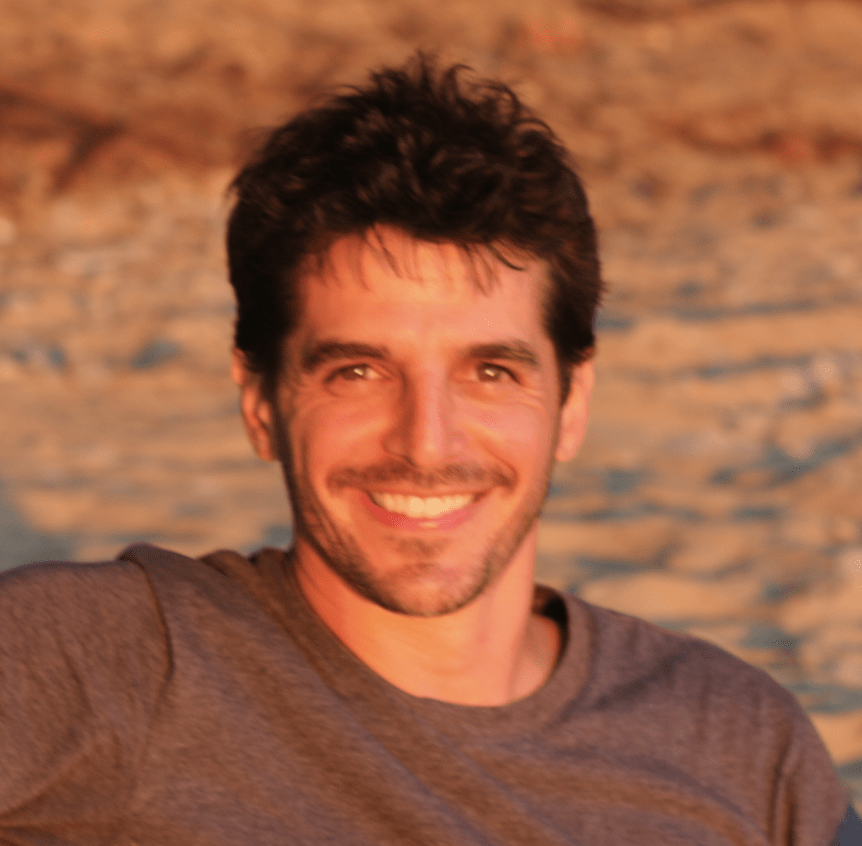
I'm a journalist and researcher with years of experience working and living in Latin America. I was born in Argentina and grew up in the United States, Mexico, and Venezuela, and I now live in Bogotá, Colombia. My long-standing journalistic and academic interests concern how processes like violence, rural development, trade, and US-Latin American relations affect people's lives in the region.

For the past three years, my reporting has focused on the violent displacement caused by Colombia's civil war. This reporting seeks to show that civilians are not simply victims caught in the cross-fire of the armed actors, but rather their principle targets. A large part of this work has involved helping the victims of the conflict tell their stories. Read More »

contact

Teo Ballvé Teo Ballvé
New York, New York

send message